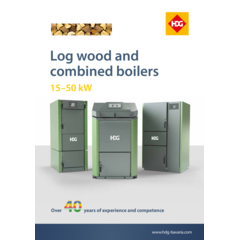
Thanks to ongoing further development of our HDG technology, our boilers meet the strictest emission limits with the highest efficiency levels
Heating with wood
During growth, trees need CO2, which they take from the air and store in the wood or leaf mass. When wood is burnt, CO2 is released – but only as much as the tree has removed from the atmosphere in the course of its growth.
Anyone who heats with wood is therefore heating sustainably in the cycle of nature, i.e. the heating is CO2 neutral.
Heating with wood also has many advantages over fossil fuels:
Short transport routes Independence and security of supply
Safe storage and transport Employment and value creation in the region
Harvesting and preparation require little energy. The use of wood in forests is sustainable.
For over 300 years, more wood in Europe has been growing than is being used.
Logwood is the most important renewable energy source for heat generation.
Logs
Wood log is the simplest form of biomass, produced from felled trees and branches. As with all forms of biomass, moisture control is of critical importance.
Wood log in particular must be stored until the moisture content is suitable for burning, normally around 20%. This essential, but natural process takes approximately one year and requires the wood logs to be split, shielded from rain, and air circulated around them. Using wet wood will cause poor performance of the boiler and reduce maintenance intervals. Whilst offering the most cost effective and simplest solution, there are several important factors to consider when purchasing a log boiler; time to split and process the wood, suitable space to dry and store the logs, and the daily input required to load and light the boiler during the heating season.